Chart of Accounts: The Foundation of Modern Accounting
Every Great System Starts with a Great Chart of Accounts
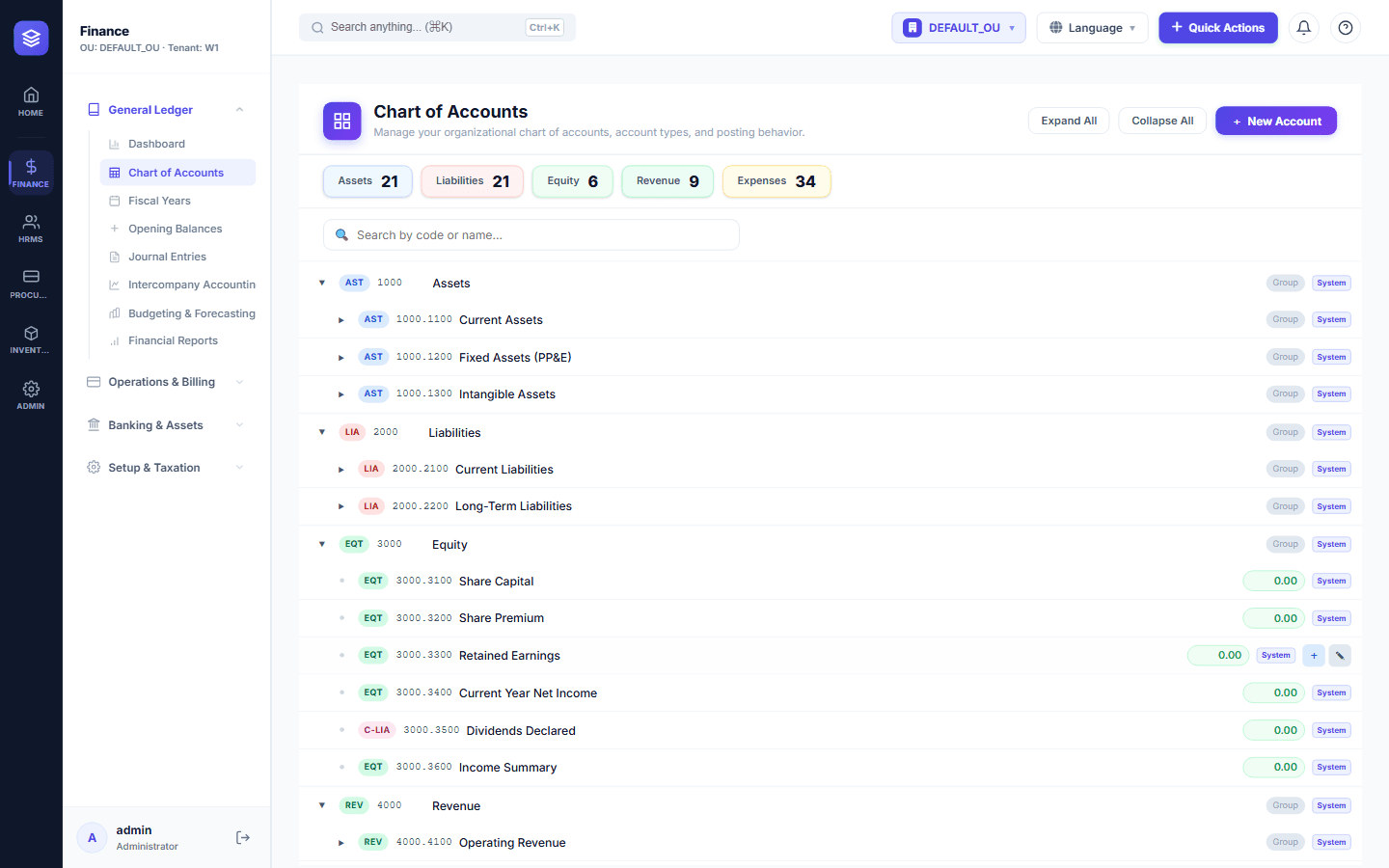
The chart of accounts is the backbone of any accounting system. It defines how every transaction is classified — and therefore how every report reads. Get it right, and reporting becomes effortless. Get it wrong, and you spend years fighting your own numbers.
What NileByte ERP Offers
Structured Hierarchy
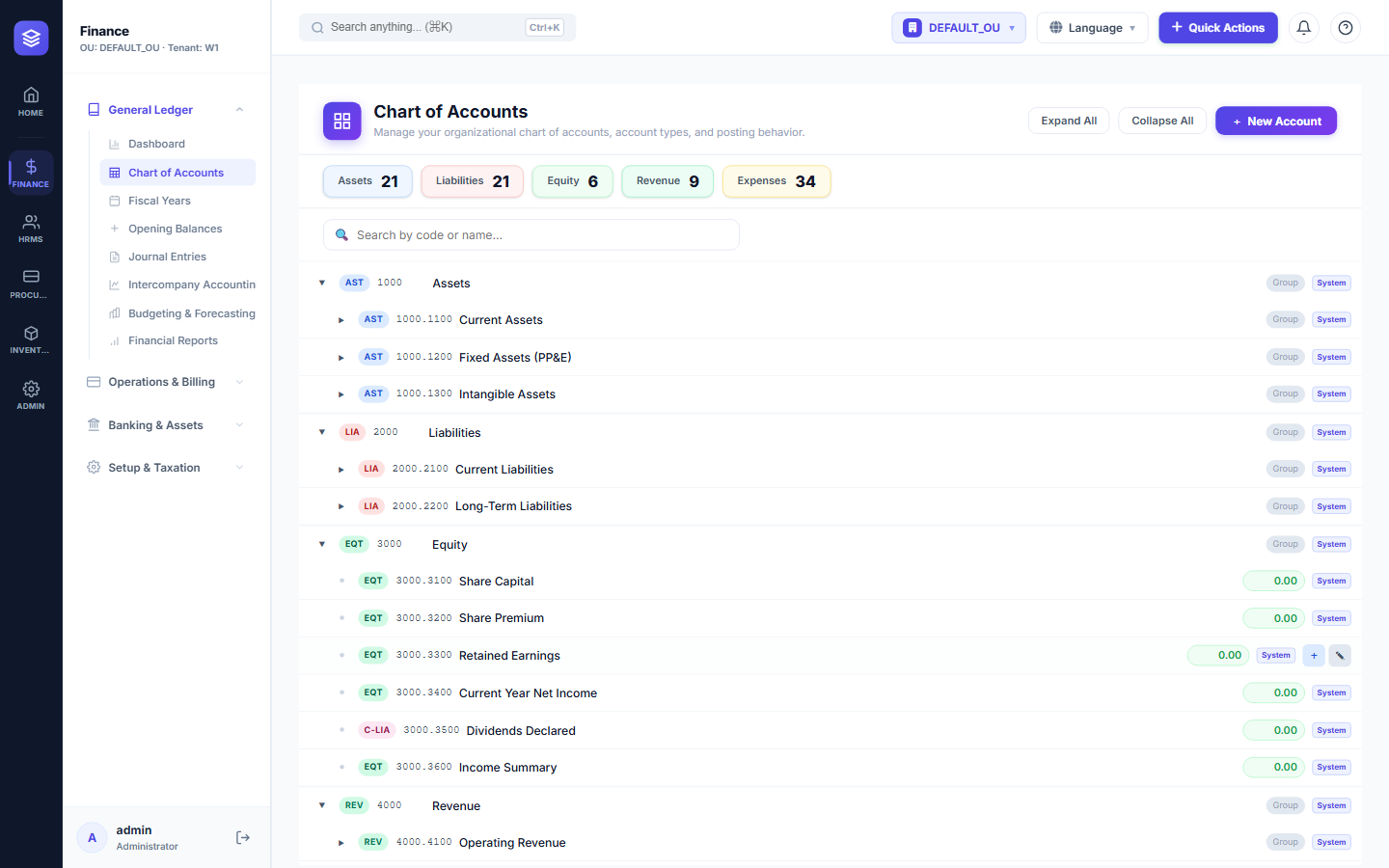
Accounts are organized in a clear hierarchy: parent accounts and sub-accounts across the five main categories — Assets, Liabilities, Equity, Revenue, and Expenses. Each account has a code, a name in English and Arabic, and a type that controls how it behaves in reports.
Flexible Account Codes
Design your own coding scheme — numeric, segmented, or hybrid. Accounts can be grouped by department, cost center, project, or branch, enabling precise profit-and-loss analysis by segment.
Currency and Multi-Company Support
Each company (tenant) has its own independent chart of accounts. Base currency is configurable, and foreign-currency transactions are tracked with proper exchange rates.
Opening Balances
Migrating from another system? Enter opening balances for every account and let the trial balance flow from day one. A built-in validation report ensures everything balances before you go live.
Report-Ready
Because the chart of accounts is structured, NileByte ERP generates trial balance, general ledger, income statement, and balance sheet reports automatically — in both English and Arabic.
Best Practices Built In
- Reserve account ranges for future expansion
- Keep the chart consistent across companies in a group
- Use cost centers to allocate shared expenses
- Review the chart annually with your auditors
With NileByte ERP, your chart of accounts stops being a headache and becomes a strategic asset.
Author at NileByte — sharing insights on software and digital transformation.
Related Articles
Inventory Control: Never Run Out of Stock Again
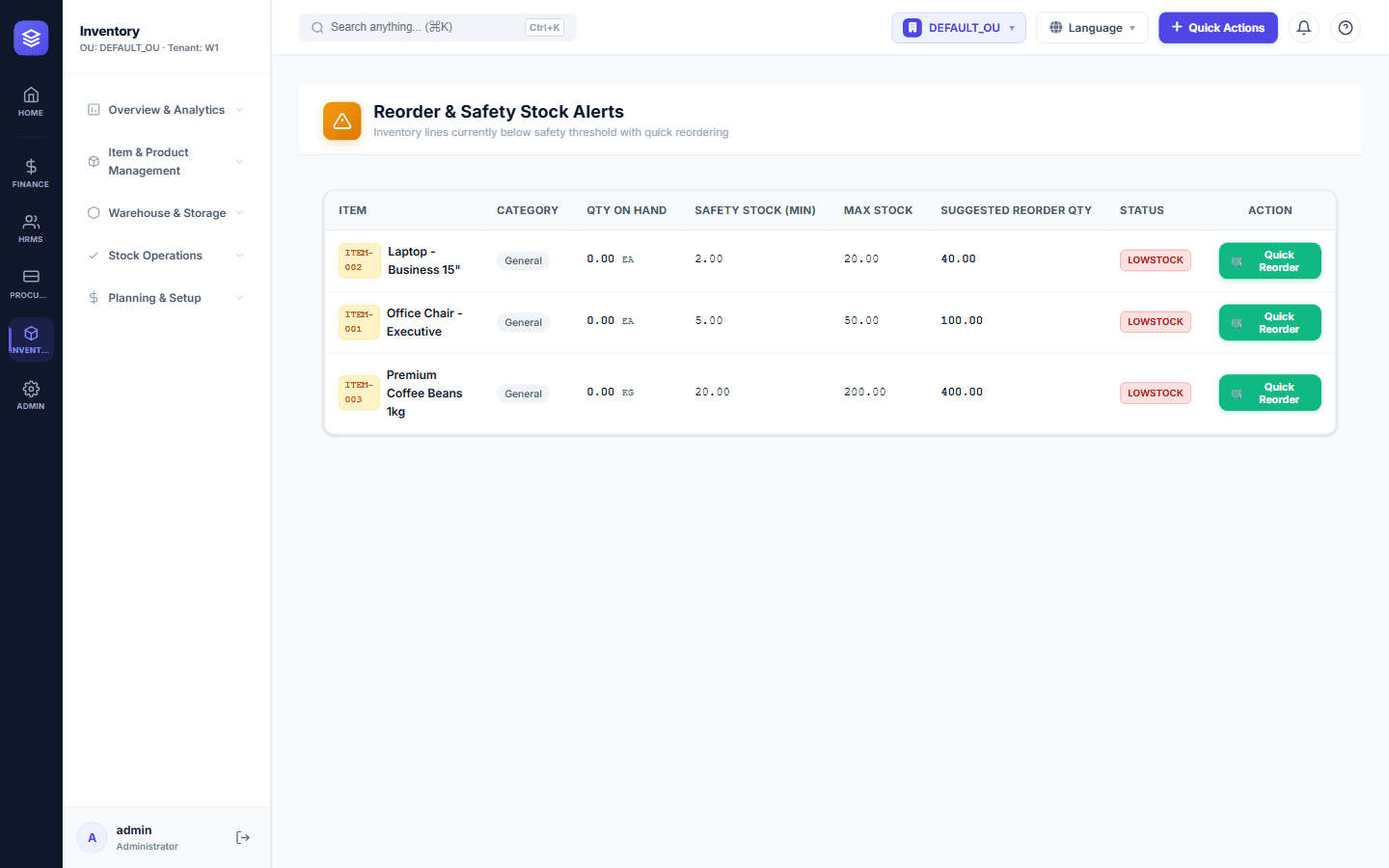
NileByte ERP's inventory module gives you complete control over stock — from receiving to issuance — with real-time balances and cost tracking.
Cloud-Ready and On-Premise: Deploy Your Way
Run NileByte ERP in the cloud, on your own servers, or hybrid — your data, your rules, your deployment.
Why Businesses Choose NileByte ERP
From family businesses to growing groups, here is why companies across Egypt and the region choose NileByte ERP.